
THE BIRTHDAY EDIT 60, IN GOOD COMPANY


Aging Ain’t Fading. The company is excellent.
SIXTY, CHAPTER TWO
Barack Obama, the Audacity to Keep Becoming—and the Small Acts That Keep History Alive
Good company is not only who sits beside us. It is also the lives that enlarge our understanding of what is possible.
We begin The Birthday Edit at sixty—not because the story begins there, but because August places us in remarkably good company.
Barack Obama was born on August 4, 1961. This August, America’s first African
American president turns sixty-five.
It is a birthday worth acknowledging, but this is more than a birthday tribute.
It is an opportunity to examine what one life can represent, what leadership can accomplish and what responsibility remains with the rest of us after the history-making moment has passed.
At VSG, we call sixty Chapter Two.
Not an epilogue.
Not a quiet exit.
Not a retreat from relevance.
A new chapter—written with the benefit of everything the first one taught us.

The August Baby Who Changed the Picture
Before we discuss policy, politics or presidential history, let us begin simply:
Happy birthday, President Obama.
His election in 2008 changed the picture hanging inside America’s imagination.
For the first time, a Black man stood before the nation as president-elect. A Black family would live in the White House—not as staff, visitors or invited performers, but as the First Family of the United States.
Barack Obama’s presidency placed Black intelligence, ambition, marriage, fatherhood, elegance and possibility at the visual center of the nation.
That image mattered.
It mattered to the adults who understood how long the road had been. It mattered to the elders who had lived through legalized segregation and voter suppression.
It mattered to the children who could finally point toward the presidency without first having to explain why someone who looked like them had never occupied it.
Representation was not the only accomplishment of the Obama presidency, but we should never allow anyone to persuade us that representation was insignificant.
For eight years, the world saw Barack and Michelle Obama descending the Grand Staircase, greeting international leaders, raising their daughters and carrying the extraordinary weight of being both a presidential family and a historic first.
They did not simply enter the White House. They altered its memory.

The Family in the Frame
The presence of Michelle, Malia and Sasha Obama deserves its own consideration.
America did not only witness its first Black president. It saw a loving, educated and visibly connected Black family living at the country’s most recognized address.
There was Michelle Obama—lawyer, mother, First Lady, advocate and style authority—standing beside her husband without ever disappearing behind him.
There were two Black daughters growing from children into young women under the gaze of the world.
They showed affection.
They laughed. They attended school.
They celebrated holidays.
They walked across lawns, entered state dinners and descended staircases beneath
portraits of presidents who could never have imagined them there.
Their very normalcy challenged generations of distortion.
For Black Americans, seeing that family did not erase racism.
It did something quieter and, in its own way, radical: it gave the country fewer excuses for pretending it had never seen Black family life characterized by discipline, tenderness, aspiration and love.
More Than a Symbol
Barack Obama’s symbolism mattered because it was accompanied by the difficult work of governing.
He entered office during the Great Recession, when businesses were closing, families were losing homes and the country’s financial system was in crisis. His administration worked to stabilize the economy, support recovery and rebuild confidence during one of the most severe economic emergencies since the Great Depression.
He signed the Affordable Care Act, the largest overhaul of the American health-care system in decades. The law expanded access to health coverage and established broad protections preventing insurers from denying coverage or charging more because of preexisting medical conditions.
He signed the Lilly Ledbetter Fair Pay Act, repealed “Don’t Ask, Don’t Tell,” appointed Sonia Sotomayor and Elena Kagan to the Supreme Court, helped secure the Paris climate agreement, restored diplomatic relations with Cuba and presided over years of economic recovery.
Not every policy was perfect.
No presidency is.
The purpose of honoring Barack Obama is not to pretend that leadership exists without compromise, criticism or unfinished work. It is to resist reducing a consequential presidency to a photograph, a slogan or a sentimental memory.
He was not simply the first Black president.
He was the president.
He made decisions, signed laws, faced crises, absorbed criticism and carried expectations unlike those placed upon any person who had held the office before him.
He governed under an extraordinary and often contradictory burden: many expected him to represent Black America while resisting any action that could be portrayed as favoring it.
He was expected to confront racism without making white America uncomfortable.
He was expected to be exceptional without appearing proud of his exceptionality.
And through it all, he remained measured, prepared and unmistakably himself.
That, too, was part of the accomplishment.
Why Remembering Matters Now
This birthday arrives during a national effort to redefine how race, equity and American history may be discussed inside federal institutions.
The current administration has moved to dismantle federal diversity, equity and inclusion programs.
It has also directed the vice president to work through his role on the Smithsonian Board of Regents to remove what the administration calls “improper ideology.” The order further seeks restrictions on future federal funding for exhibits or programs it describes as divisive or inconsistent with federal policy.
The practical concern is that honest examinations of racism, power and disenfranchisement may be treated as divisive rather than essential parts of the American record.
We should be honest about what that means.
When the language of inclusion is removed, when Black history is recast as division and
when honest accounts of inequality are treated as attacks on the country, remembering becomes more than nostalgia.
The Small Acts That Keep History Alive
History is preserved through institutions, archives and official records. But it is also kept alive by ordinary people who choose to remember, to visit, to speak and to show up.
My actions may be small beside the scale of Barack Obama’s accomplishment, but they are mine.
I stood inside the White House before the official portraits of President Barack Obama and First Lady Michelle Obama.
Years earlier, I joined members of New York’s fashion community at Fashion World for Obama gatherings because I understood that his candidacy—and the picture it offered America—mattered.
During New York Fashion Week, I canvassed inside and outside Bryant Park, registering voters and doing my small part. I used the right available to me in pursuit of a dream—and in honor of those who had prayed for that right, fought for it, and would have used it if they had been allowed.
It was a small act, but it was mine.
This September, I will travel to Chicago to continue that personal journey.
Not simply as a tourist, but as someone who lived through this history, supported it and refuses to let its meaning be diminished.

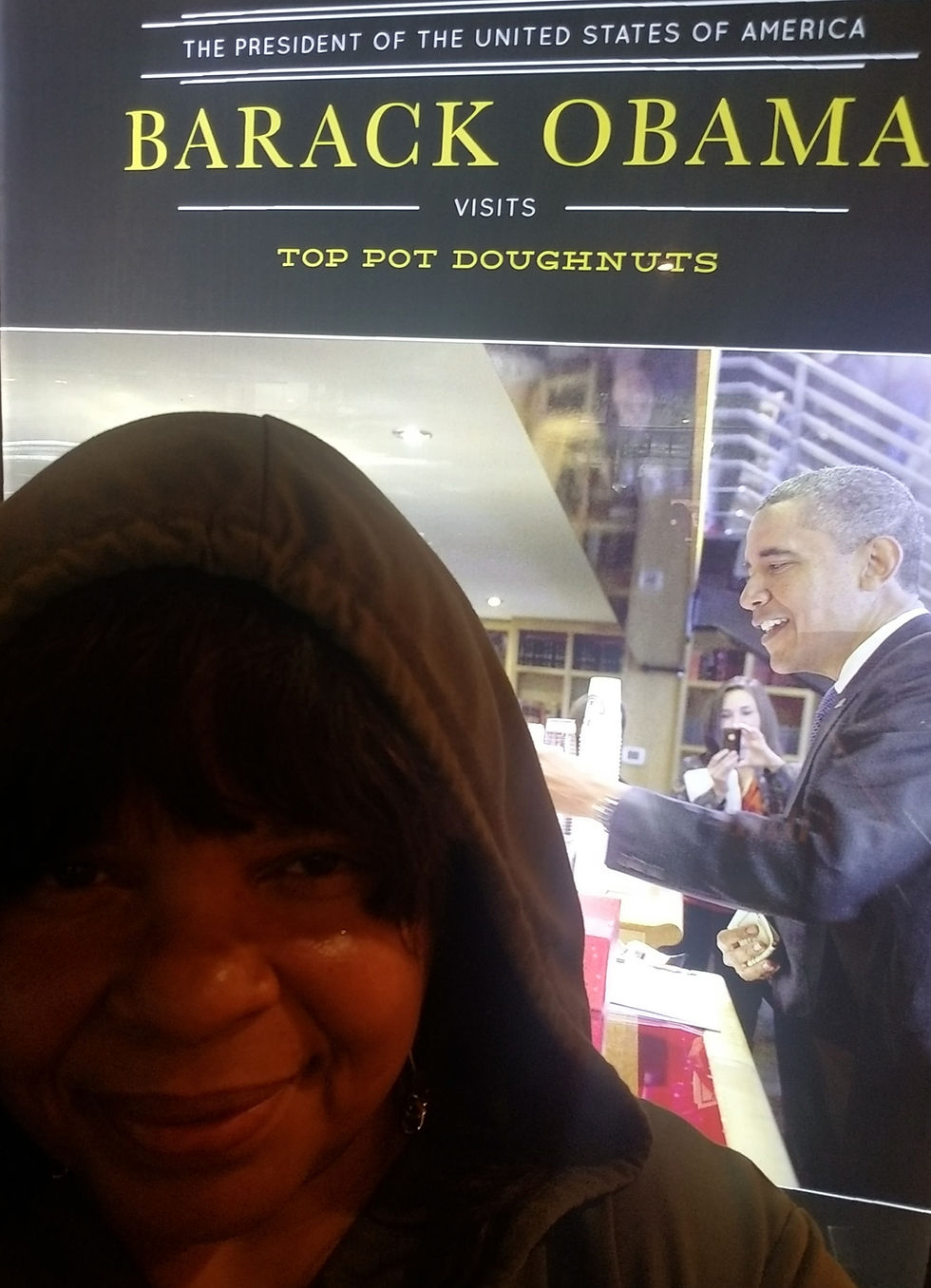
Remembering becomes stewardship.
The history of African Americans in the United States is not an optional chapter that can be removed when it makes someone uncomfortable.
It is American history.
African Americans cultivated land, constructed buildings, fought in wars, created industries, organized movements, raised families, developed art forms, built institutions and repeatedly demanded that the nation honor promises already written into its founding documents.
Barack Obama’s presidency belongs inside that record.
It cannot be undone by a new administration. It cannot be erased by a renamed program, a revised exhibit or a changed web page.
But history does require witnesses.
It requires people willing to speak its names, preserve its evidence, tell its stories and refuse to surrender its meaning.
They may change the language of a program, remove a name from a page or narrow the story displayed in a public room. But they cannot reverse what happened—and they cannot erase what we are willing to remember aloud.
From the South Side to the White House—and Back Again
Before Barack Obama entered national politics, he worked as a community organizer on Chicago’s South Side.
That is why the location of the Obama Presidential Center matters.
The Center is not sitting apart from the community that helped shape him. It stands on
Chicago’s South Side as a museum, gathering place and civic campus designed to connect presidential history with the work ordinary people can do in their own communities.
The Obama Presidential Center was officially dedicated on June 18, 2026. Its campus and museum opened to the public on June 19.
This September, I am going to Chicago to see it for myself.
I will walk through the museum and stand inside the physical record of a history I watched unfold.
I want to see what has been preserved.
I want to study how the story is presented.
I want to remember what it felt like when a possibility that had been dismissed for generations
became real before our eyes.
I am not going only as a tourist.
I am going as a witness.

The Scale of His Accomplishment—and the Scale of My Actions
Barack Obama became president of the United States.
I did not pass legislation. I did not stand behind the presidential seal. I did not carry the responsibilities of a nation.
My actions are human-sized.
I write.
I remember.
I create images in which grown Black women remain visible.
I built VSG as a place where age and size are not treated as defects to be concealed
before a woman can be considered stylish.
I tell stories about the people whose lives enlarged what was possible for the rest of us.
And this September, I will travel to Chicago and stand inside a history that I once watched from a distance.
These actions are not equal to his accomplishment. They do not need to be.
One of the lessons of the Obama story is that history does not move only through presidents, legislation and monumental speeches. It also moves through the millions of ordinary people who pay attention, participate, contribute, preserve, teach and carry the story forward.
A national campaign is built from individual decisions.
A movement is built from people who show up.
A historical record survives because someone considers it important enough to keep.
My work may be small when measured beside a presidency.
But small does not mean meaningless.
Small is the scale at which most of us are given the opportunity to act.


The Audacity of a Second Chapter
Barack Obama turns sixty-five with a presidency already behind him, a newly opened presidential center and more work still ahead.
That is the real connection to SIXTY: Chapter Two.
Chapter Two does not begin because Chapter One failed.
It begins because a fully lived life still has pages left.
For grown women, sixty can bring complicated emotions.
We may look back at careers,
relationships, choices, sacrifices and responsibilities.
We may recognize what we built—and what building it cost us.
But sixty is not the age at which possibility closes.
It is the age at which experience, perspective and courage finally know one another by name.
At sixty, we are allowed to begin again without pretending we are starting from nothing.
We bring our receipts.
We bring every room we entered, every responsibility we carried, every heartbreak we survived and every lesson we paid for.
We are not new.
We are informed.
That is the power of Chapter Two.
Sixty & Silver

Silver is the signature color of this chapter.
Not because silver suggests that the brightest years have passed.
Because silver has a brilliance all its own.
Silver reflects light.
It communicates clarity, distinction, modernity and value refined over time. It does not compete with youth. It represents something youth cannot imitate: earned luminosity.
Gray hair does not signal disappearance.
Lines on a face do not cancel beauty.
A milestone birthday does not remove a woman from fashion, ambition, romance, travel, business, citizenship or possibility.
Silver is not the absence of color. It is light refined by time.
For Sterling
I cannot speak of August, silver, grace or becoming without honoring my mother, Sterling, an August baby now in glory.
My mother lived with service, grace and unmistakable style. She gave of herself—to the flag, to her family and to those she loved. Her example reminds me that service must also include the care, attention and importance we give ourselves.
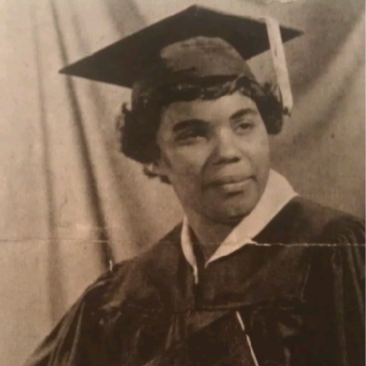
Thank you for your service, your grace and the style you carried so naturally. Long before there was VSG, there was your example. Before I ever understood style as a profession, I knew it as Sterling—The lesson is not about how many years lived. It is that none of us knows how many years we will be given. Some people reach ninety-nine. Many do not. Life is short. Time is precious. Live your best life now. Travel while you can. Wear the beautiful thing. Get what you truly want and love. Make the memory. Stop postponing your joy. I am VSG because she was Sterling. Gone Too Soon...
That is why our sixty statement reads:
SIXTY
AGING AIN’T FADING.
Chapter Two.
Still stylish.
Still engaged.
Still becoming.
The Good Company Five
Every chapter of The Birthday Edit will include five VSG selections chosen to accompany its message, mood and signature color.

1. The SIXTY: Chapter Two Tee
The declaration.
Wear it under tailoring, with satin, with denim or wherever a grown woman decides her story should be read.
Why it keeps good company: Because a milestone deserves more than a quiet acknowledgment.

2. The Silver Statement Suit
The arrival.
A silver suit does not whisper that you have entered the room. It reflects the light and makes the room adjust accordingly.
Why it keeps good company: Because refinement and visibility belong in the same outfit.

3. The White-and-Silver Layer
The light-catching essential.
A polished white tank with silver detail brings brightness beneath tailoring and gives the statement pieces room to shine.
Why it keeps good company: Because a strong new chapter needs light, ease and something beautiful underneath it all.
You can still use a black skirt or trouser in the photographs as the grounding piece—it simply does not need to occupy one of the five featured product positions.

4. The Crystal-Mesh Clutch
The finishing statement.
Silver crystal mesh, a wide-mouth frame and a detachable chain make this the kind of bag that catches the light without sacrificing room for the essentials. Carry it by hand for full evening polish or wear it on the chain when the night calls for ease.
Why it keeps good company: Because Chapter Two deserves a finishing piece with presence—not an afterthought.

5. The Pivot Year
The inward piece.
A thoughtful companion for the woman examining where she has been, what she has learned and how she wants to move through the year ahead.
Why it keeps good company: Because Chapter Two begins when a woman gives herself permission to pivot toward the life that now fits.
In Good Company
In September, when I enter the Obama Presidential Center, I will not pretend my footsteps are equal to Barack Obama’s.
I will understand something more important:
They belong to the same long journey.
His accomplishment was historic.
My actions are small.
But preservation has always depended upon ordinary people willing to carry what history gives them.
That may mean visiting a museum.
It may mean reading a biography.
It may mean telling a child what happened before she was born.
It may mean supporting a Black-owned business, protecting a family photograph,
recording an elder’s story, correcting an inaccurate statement or refusing to allow
African American achievement to be spoken of as though it were separate from the
American story.
It may mean creating a fashion company that insists grown Black women remain visible.
None of us has to become president to become a keeper of history.
We only have to decide that what happened matters—and act accordingly.
So we begin The Birthday Edit at sixty:
In silver.
In gratitude.
In remembrance.
And in exceptionally good company.
Happy birthday, President Barack Obama. Happy heavenly birthday to my Mommie. And happy birthday to all the glorious Lions born in August.
And to every grown woman entering Chapter Two:
Your presence still matters.
Your participation still matters.
Your personal style still matters.
Your story is still unfolding.
THE VANGUARDS
Butterfly McQueen became famous as Prissy, the frightened maid in Gone with the Wind who knew “nothing about birthing babies.” But when Hollywood continued offering degrading domestic roles, watermelon imagery and “handkerchief-head” caricatures, she refused. She did not mind being funny—she would not be made to look stupid. The roles disappeared; she did not. At 64, she earned a degree in political science, and at 69, she won an Emmy. Thelma “Butterfly” McQueen, we see you. Never confuse being written off with being finished. Do not play small to remain acceptable. Take up space. Welcome to Chapter Two.
Aging ain’t fading.
We see you because we are you.
Come hang with us.
Welcome to Chapter Two.


Comments